


C-section recovery physio in Manchester
Heal well, rebuild your core and get back to lifting your baby, walking far and training again, with a plan made for you.

Physio after a C-section in Manchester city centre and at home
Reviewed by Nick Chatziviltsos, PgDip, HCPC-registered physiotherapist (PH114351), November 2026
At a glance
Who it's for: Anyone recovering from a planned or emergency caesarean, whether weeks or years ago.
Main goals: Moving comfortably, lifting your baby and car seat, a settled scar, a strong core, and getting back to exercise.
Typical recovery: The wound takes about 6 weeks to heal. Feeling fully yourself often takes several months.
First step: Your 6 to 8 week check with your GP. We can visit you at home before that if you need help moving.
Sessions: Many people need 4 to 6 over 3 months.
Avoid: Lifting anything heavier than your baby for about 6 weeks, and high-impact exercise for about 3 months.
Get urgent help: Heavy bleeding, chest pain or breathlessness: call 999. A fever, a hot or oozing wound or a swollen calf: call your GP, midwife or 111 the same day.
A caesarean is major surgery, and you're recovering while caring for a newborn. It's no wonder it can feel hard. Getting out of bed, coughing and lifting your baby can all feel daunting at first.
The NHS says most women leave hospital 1 or 2 days after a caesarean. It may take several weeks before you feel comfortable, and longer before you feel strong.
That's where physio comes in. We can visit you at home in the early weeks. Then we help you rebuild your core, settle your scar and get back to exercise.
🛠️ How we help you recover from a C-section
Every C-section recovery plan at Athos Physio follows the same three steps. What changes is how far you are from the birth and what you want to get back to.
Step 1. Understand your recovery
In your first 60-minute session we work out three things:
How you're healing: your scar, your tummy, your strength and how easily you move.
What's getting in the way: pain, a tight or numb scar, back ache, leaking, or broken sleep.
What you want back: walking with the buggy, lifting your toddler, the gym or running.
We show you on a 3D anatomy model the layers that heal after a caesarean. It helps you see why recovery takes time.
Step 2. Move with confidence
Home visits in the early weeks. If getting into town is hard, we come to you.
Everyday movement. Rolling out of bed, standing tall, coughing with support, and lifting your baby safely.
Pelvic floor and deep tummy exercises. We teach and coach them. We don't do internal pelvic floor checks.
Scar care. Once your wound has fully healed, we use gentle scar mobilisation and show you how to do it at home.
Ease aches and pains. Soft tissue work for a sore back, neck or shoulders from feeding and carrying.
Step 3. Build strength and get back to exercise
Progressive core strength, from heel slides and bridges to side planks and Pallof presses.
Whole-body strength, including squats, deadlifts, rows and carries, so lifting your baby feels easy.
Rehab on the gym floor. Being inside F45 NQ means we can use kettlebells, sleds and cables once you're ready.
Return to running or classes, using the UK postnatal running tests. See our return to exercise after birth page.
We finish when you feel strong and confident in your body, not just when the scar has healed.
Home from hospital, or still not feeling yourself months later? Your first 60-minute session sets your plan, in clinic or at home. Book your assessment →
🔍 What is a caesarean section?
In a caesarean, your baby is born through a cut in your tummy and womb. The cut is usually low and across, along the bikini line. Tommy's says the scar is usually 10 to 20 cm long.
The surgeon goes through several layers, including skin, fat, a tough sheet of tissue called fascia, and the womb. Your six-pack muscles are usually moved apart rather than cut.
Each layer heals at its own pace. The skin usually heals in about 6 weeks. The deeper layers take longer. The UK running guideline notes the tummy fascia has only regained part of its strength by 6 weeks.
Types of caesarean
Planned (elective) caesarean: booked in advance, often for medical reasons or by choice; you may be less tired from labour, but it's still major surgery.
Emergency caesarean: decided during pregnancy or labour, sometimes after a long labour; you may also have pelvic floor strain from labour, and more tiredness.
Caesarean after a previous one: through the same scar, in most cases; scar tissue may feel tighter. The plan is similar.
Caesarean with complications: for example, heavy blood loss or infection; recovery is often slower. We work closely with your GP or midwife.
Whatever your type of caesarean, your pelvic floor still carried your baby for 9 months. It needs rebuilding too.
⚠️ Recovery symptoms: what's normal?
Some pain and tiredness are expected. The NHS says discomfort usually lasts a few days, but for some women it lasts several weeks. You might notice:
Soreness around the scar, worse when you cough, laugh or get up
Numbness or tingling around the scar, which can last months
An overhang or swelling above the scar
Vaginal bleeding for a few weeks, which slowly gets lighter
Trapped wind and tummy cramps in the first days
Tiredness and broken sleep
Is it normal healing, an infection, a clot or something else?
Pain that eases day by day: normal healing.
A scar that's hot, red, swollen or oozing, or a high temperature: may be an infection. Call your GP, midwife or NHS 111 the same day.
Pain, redness or swelling in your calf: may be a blood clot. Get an urgent GP appointment or call NHS 111.
Leaking urine, or pain when you wee: see your GP or midwife. Leaking can also need a women's health physio.
A ridge down your tummy when you sit up: may be a tummy gap. See our diastasis recti page.
Aching low back or pelvis: common after pregnancy. See our lower back pain or SI joint pain pages.
🔍 What slows C-section recovery?
Most women recover well. When recovery stalls, it's usually for reasons we can work on together.
Common reasons we see in Manchester
Doing too much too soon, often because there's no one else to help.
Staying still for too long, which adds to stiffness and raises the risk of clots.
A tight or sensitive scar, which makes you guard and move stiffly.
Holding your breath when you lift, which pushes pressure down and out.
Broken sleep and stress, which slow healing and make pain feel worse.
Infection or heavy blood loss around the birth.
Myths about C-section recovery
"A caesarean protects your pelvic floor." It doesn't. Tommy's notes the pelvic floor still takes strain in pregnancy.
"You can't lift your baby." You can. The NHS says holding and carrying your baby is fine.
"You should rest in bed." Gentle walking from early on helps healing and lowers the risk of clots.
"Your scar will always be tight and numb." Feeling often returns slowly. Scar mobilisation can help once it's healed.
"You'll never run again." Most women return to running, lifting and classes with the right build-up.
🧪 How we assess you after a C-section
Your first session lasts 60 minutes, in clinic or at home. Ideally you'll have had your 6 to 8 week check with your GP first. You're welcome to bring your baby. Here's what happens:
Your story (10 to 15 minutes). Your birth, your recovery so far, your mood, sleep and feeding, and your goals.
Safety screen. We check for the warning signs listed on this page, including your wound, bleeding, calf and mood.
Scar check. We look at how your scar has healed, and check for tightness, tenderness and numbness. Scar work starts only once it's fully healed.
Tummy check. We measure the inter-recti distance in finger widths, and watch for doming as you lift your head.
Functional load test. We watch how you roll, get up from lying, squat and lift a weight like a car seat.
Strength tests. A bridge and the 30-second sit-to-stand test, which we repeat to track progress.
Your plan. In plain English: what to work on this week, what to avoid, and how many sessions we expect.
We check your tummy and scar from the outside only. If you need an internal pelvic floor check, we'll refer you to a women's health physio, your GP or your midwife. You'll leave with the first two or three exercises of your custom rehab plan.
🛠️ C-section recovery rehab at Athos Physio
Every plan moves through four phases. How fast you move depends on how you heal, not on the calendar.
Protect and move (0 to 2 weeks). Move safely and keep your chest clear. Deep breaths, ankle pumps, short walks, supported coughing, pelvic floor exercises once the catheter is out.
Reconnect (2 to 6 weeks). Walk further and reconnect with your core. Deep tummy holds, pelvic tilts, gentle bridges, longer walks, lifting your baby well. Home visits if needed.
Rebuild (6 to 12 weeks). Settle the scar and build strength. Scar mobilisation once healed, heel slides, side-lying work, squats, the exercise bike, swimming once cleared.
Return (3 months onwards). Back to the gym, classes or running. Deadlifts, carries, side planks, F45 classes scaled for you, running if you pass the tests.
If your caesarean was months or years ago, we start at the phase that fits you.
Scar mobilisation
Once your wound has fully healed, gentle scar work can help a tight or sensitive scar. We'll show you how to do it yourself, often with small circles using an unscented cream. Tommy's notes the evidence for scar massage is limited, so we use it alongside exercise.
Pelvic floor exercises
The POGP says you can start pelvic floor exercises 24 hours after birth, or once your catheter is out. We teach and coach them. We don't do internal pelvic floor assessments. If you have leaking, heaviness or a dragging feeling, we'll always refer you to a women's health physio, your GP or your midwife.
Your home programme
Early on, it's a few minutes of breathing, walking and gentle core work, 3 times a day. Later, it's 4 or 5 exercises, about 20 minutes, most days. Many people need 4 to 6 sessions over 3 months.
What helps recovery after a C-section?
The NHS advises getting up and moving soon after a caesarean, with gentle activity such as a daily walk. This lowers the risk of blood clots. It advises holding off on exercise, heavy lifting and sex until you feel able, which may not be for 6 weeks or so.
The POGP advises deep tummy exercises from the day after birth, holding for 10 seconds, 10 times, 3 times a day. It also advises not lifting anything heavier than your baby for at least 6 weeks.
The UK postnatal running guideline lists a caesarean as a reason to take extra care. It advises scar work from 6 to 12 weeks, and no running before 3 months.
Recommended: getting up and walking soon after surgery; pelvic floor and deep tummy exercises from the early days; supporting your scar when you cough or sneeze; gradual strength work, then a tested return to running.
Less useful: long periods of bed rest; heavy lifting or high-impact exercise in the first weeks; scar massage before the wound has fully healed.

⏱️ How long does it take to recover from a C-section?
Going home from hospital: typical timing: 1 or 2 days after surgery.
Stitches or staples removed, if not dissolvable: typical timing: 5 to 7 days.
Wound healed: typical timing: about 6 weeks.
GP postnatal check: typical timing: 6 to 8 weeks after birth.
Driving: typical timing: often 4 to 6 weeks, once you can do an emergency stop.
Lifting more than your baby: typical timing: from about 6 weeks.
Swimming: typical timing: 7 days after bleeding stops, once your wound has healed.
Gym classes at low impact: typical timing: often from 8 to 12 weeks.
Running: typical timing: no sooner than 12 weeks, once you pass the tests.
Feeling fully yourself: typical timing: several months.
These are guides. If your caesarean was an emergency or had complications, your timeline may be longer.
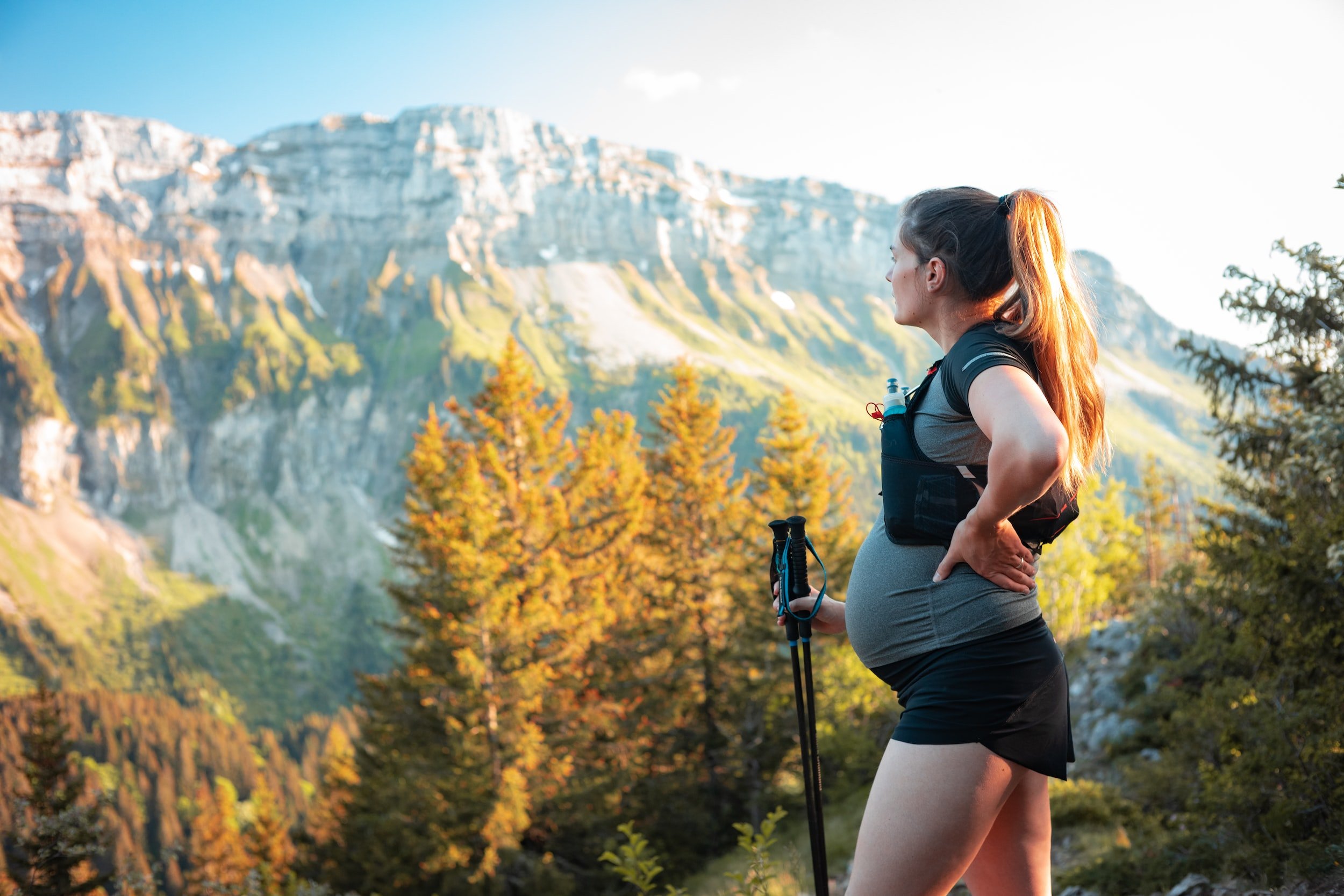
✅ Life after a C-section
Around the house
Roll onto your side, drop your legs over the edge, then push up with your arms
Hold a pillow or rolled towel over your scar when you cough, sneeze or laugh
Wear loose clothes and high-waisted cotton underwear that sits above the scar
Keep the things you need at waist height, so you don't bend or reach
Baby care and lifting
Feed in a supported position, with a pillow over your scar. Lying on your side can help
Ask for help with the car seat and buggy in the early weeks
Have older children climb up to you, rather than lifting them
Breathe out and gently squeeze your pelvic floor and tummy as you lift
Keep your wrists straight when you scoop your baby up. Thumb pain can be De Quervain's tenosynovitis
Sleep and rest
Rest when your baby sleeps, and accept help with chores
Sleep on your back with a pillow under your knees, or on your side with a pillow under your tummy
Take your painkillers as prescribed, so you can move and sleep better
Getting back to driving and exercise
Practise an emergency stop in a parked car before you drive. Check with your insurer first
Walk every day, a little further each week
Wait for your 6 to 8 week check before starting high-impact exercise
See our return to exercise after birth page for the gym, F45 and running
Related conditions
Diastasis recti: a gap down the middle of your tummy after pregnancy
Return to exercise after birth: a safe route back to running, the gym and F45
Back pain in pregnancy: back and pelvic pain during and after pregnancy
Pregnancy and postnatal physio: every pregnancy and postnatal problem we treat
❓ C-section recovery FAQs

🚨 Physio, GP, midwife or A&E?
Most aches and stiffness after a caesarean are safe to manage with physio. A few warning signs need a doctor or midwife quickly. This list follows NHS advice.
Book a physio (no GP referral needed): stiffness, weakness, a tight scar, or back ache from lifting.
See your GP or midwife: leaking urine, wind or poo, a heavy or dragging feeling, or a bulge in the vagina (see a women's health physio, your GP or your midwife; we'll help you arrange it); low mood, anxiety or baby blues that haven't lifted after 2 weeks (talk to your GP, midwife or health visitor).
Call your GP urgently or 111: pain that isn't controlled, or is getting worse (contact your midwife or GP straight away); a fever, shivering or tummy pain, especially with smelly discharge (call your GP, midwife or NHS 111 the same day); a scar that's hot, red, swollen or oozing, or has pus (call your GP, midwife or NHS 111 the same day); pain, redness or swelling in your calf (get an urgent GP appointment or call NHS 111).
Call 999 or go to A&E: sudden or heavy bleeding, especially if you feel faint or dizzy; chest pain, a cough with breathlessness, or difficulty breathing (call 999 or go to A&E now); thoughts of harming yourself or your baby (call 999 or go to A&E now; you can also call NHS 111 and choose the mental health option).
If you're ever unsure, ring us on 07475 433300 and we'll tell you honestly whether you should see us or someone else first.
Not sure if what you're feeling is normal? Book a free 15-minute call and we'll tell you honestly. Book a free call →
-
The wound usually heals in about 6 weeks. Feeling fully yourself often takes several months.
-
Walking, pelvic floor and deep tummy exercises can start in the first days. Wait for your 6 to 8 week check before high-impact exercise.
-
Straight away. Avoid lifting anything heavier than your baby for about 6 weeks.
-
Often after 4 to 6 weeks, once you can do an emergency stop comfortably. Check with your insurer first.
-
Once it's fully healed, gentle scar massage may help a tight or sensitive scar. The evidence is limited, so we use it alongside exercise.
-
It's common to lose some feeling around the scar after surgery. Feeling often returns slowly over months.
-
No sooner than 12 weeks. Often it's between 3 and 6 months, once you pass the readiness tests.
-
Yes. We offer home physio visits, which can be the easiest option in the first few weeks.
-
No. We teach and coach pelvic floor exercises. If you need an internal check, we'll refer you to a women's health physio, your GP or your midwife.
-
Yes. You're welcome to bring your baby to your appointment.
-
Your first 60-minute assessment and treatment is £95. Follow-up sessions are £55 for 30 minutes, £95 for 60 minutes or £135 for 90 minutes.
-
Yes. Book a free 15-minute consultation and we'll tell you honestly whether physio is the right next step.
📍 Book C-section recovery physio in Manchester city centre or at home
Athos Physio is inside F45 NQ, 77 Piccadilly, Manchester M1 2BU, a two-minute walk from Piccadilly station and Piccadilly Gardens. We're open 7am to 8pm, Monday to Friday, so you can come in before or after work.
Your first appointment is a 60-minute assessment and treatment (£95). Follow-ups are £55 for 30 minutes, £95 for 60 minutes or £135 for 90 minutes. We work with Bupa, WPA, Vitality and Aviva, and you can see all our fees on the price list.
Can't get into town? We also offer home physio visits and online physiotherapy. Not sure physio is right for you? Book a free 15-minute call and we'll talk it through.
Call or WhatsApp 07475 433300, or book online.
Other services: Physiotherapy and active rehab · Sports massage · Pregnancy and postnatal physio · Home visits · Online physio
Written by Nick Chatziviltsos, physiotherapist and founder of Athos Physio, BSc (Hons) Physiotherapy, HCPC registered. Last reviewed: November 2026.
Insurance providers we are affiliated with


Athos Physio is a full-service physiotherapy clinic
We offer injury rehabilitation, post-surgery functional strengthening, deep tissue massage and pain relief, and strength training expertise. We support you in becoming pain-free so that you can achieve a limitless life experience. If you want to speak with us before booking a session you reach out via WhatsApp, call us or email us.
We are based in Manchester city centre a couple of minutes walk from Piccadilly train station and Piccadilly Gardens Square