


Back pain in pregnancy: physio in Manchester
Ease the ache in your back, sleep better and stay active right up to birth, with gentle treatment in positions that suit your bump.

Back pain physio for pregnancy in Manchester city centre
Reviewed by Nick Chatziviltsos, PgDip, HCPC-registered physiotherapist (PH114351), November 2026
At a glance
Who gets it: Most pregnant women at some point. It's very common, especially early on and as your bump grows.
Main symptom: An ache across the lower back, sometimes the upper back, worse after standing, sitting or lifting.
What helps most: Staying active, gentle exercise, hands-on treatment and small changes to how you sit, lift and sleep.
Sessions: Often 2 to 5 in pregnancy, with a check-in after birth if you need one.
Avoid: Lifting heavy things, twisting as you lift, and long spells in one position.
Get urgent help: Back pain with bleeding, a fever, pain when you pee, regular tightenings, or numbness around your bottom: call your midwife, maternity unit or 999.
Back pain is one of the most common aches of pregnancy. The NHS says your ligaments naturally soften and stretch to get ready for labour. That, plus the weight of your growing bump, puts extra strain on your lower back.
Common doesn't mean you have to put up with it. Pain that stops you sleeping, working or enjoying your pregnancy is worth getting help for. Most back pain in pregnancy settles well with the right plan.
At our clinic inside F45 NQ on Piccadilly, we treat back pain safely at every stage of pregnancy. You'll lie on your side or sit supported, and every exercise is chosen with your bump in mind.
🛠️ How we treat back pain in pregnancy
Every plan at Athos Physio follows the same three steps. What changes is how far along you are and what your days look like.
Step 1. Find what's causing your back pain
In your first 60-minute session, we work out three things:
Where it's coming from: your lower back, your pelvic joints, your upper back and ribs, or an irritated nerve.
What's loading it: a desk job, a standing job, lifting a toddler, a long commute or poor sleep.
What's keeping it sore: stiff joints, tired muscles, doing less exercise than usual, or worry about what the pain means.
We use a 3D anatomy model to show you how your spine changes in pregnancy. It helps you see why simple changes make a difference.
Step 2. Ease the pain safely
Hands-on treatment. Gentle joint mobilisation and soft tissue work for your back, hips and shoulders. You lie on your side with pillows or sit leaning forwards. IASTM is used on your back and hips only, never over your bump.
Change what aggravates it. How you sit at work, how you lift, and how you get in and out of bed.
Find the movements that help. Gentle stretches and back movements on all fours often ease pain the same day.
Pelvic floor and deep tummy work. We teach and coach pelvic floor exercises. We don't do internal pelvic floor assessments. If you need one, we'll refer you to a women's health (pelvic health) physio, your GP or your midwife.
Step 3. Stay strong to birth and beyond
Strength you can keep doing, such as sit-to-stands, side-lying hip lifts, supported squats, rows with a band and wall push-ups.
Rehab on the gym floor. Being inside F45 NQ means we can practise lifting, carrying and bending safely, with real loads.
Get ready for life with a baby. Lifting a car seat, feeding positions and getting up from the floor.
A flare-up plan. What to do on a bad day, and which exercises to use.
You'll get a custom rehab and strengthening plan, so you know exactly what to do at home.
Back aching every day? Your first 60-minute session finds the cause and starts safe treatment the same day. Book your assessment →
🔍 What is back pain in pregnancy?
Back pain in pregnancy is pain anywhere from your upper back down to the top of your pelvis. Most of it comes from the lower back. It's a load problem, not damage to your spine.
As your bump grows, your centre of gravity moves forwards and the curve in your lower back changes. The ligaments around your spine and pelvis also soften. Your back muscles work harder to keep you upright.
It isn't a sign that anything is wrong with your baby. But some back pain, especially later in pregnancy, can be a sign of labour or infection. The warning signs listed on this page show when to call your midwife.
Types of back pain in pregnancy
Lower back pain: across the lower back, above the pelvis; worse bending, lifting, or after sitting or standing for long. Eases when you move.
Pelvic girdle pain (PGP): low at the back of the pelvis or over the pubic bone; worse walking, on stairs, turning in bed or parting your legs. See pelvic girdle pain in pregnancy.
Upper back and rib pain: between the shoulder blades or around the lower ribs; worse later in pregnancy as your bump pushes up, and when sitting slumped.
Nerve pain (sciatica): buttock and down the leg, sometimes below the knee; tingling or numbness in the leg, pain that shoots.
Back pain after birth: lower or upper back; worse feeding, lifting your baby or bending over a cot or bath.
⚠️ Back pain symptoms in pregnancy
You might notice:
A dull ache across your lower back, worse at the end of the day
Stiffness getting up after sitting or first thing in the morning
Pain bending, lifting or putting on shoes and socks
Aching between your shoulder blades, or around your ribs, later in pregnancy
Pain after standing for long, which eases when you sit or lie on your side
Pain that spreads into your buttock, sometimes down the leg
Is it back pain, PGP or something else?
Ache across the lower back, eased by moving: usually pregnancy back pain. That's this page.
Pain at the back of the pelvis or over the pubic bone, worse walking or on stairs: often pelvic girdle pain. See pelvic girdle pain in pregnancy.
Pain, tingling or numbness below the knee: may be an irritated nerve. We check this carefully.
Back pain in the second or third trimester that comes and goes, or tightens: may be early labour. Call your midwife or maternity unit.
Pain on one or both sides under your ribs, with a fever or pain when you pee: may be a kidney infection. Call your GP or midwife urgently.
🔍 What causes back pain in pregnancy?
There's rarely one cause. Usually it's a mix of extra load, a changing posture and doing less exercise than your body is used to.
Common triggers we see in Manchester
Long days at a desk. Hours at a laptop, often slumped, especially later in pregnancy.
Standing jobs. Retail, hospitality and healthcare shifts on your feet.
Lifting older children. Toddlers on one hip, car seats and buggies.
Dropping exercise. Stopping the gym or running altogether, rather than adapting it.
Poor sleep. Finding a comfortable position gets harder as your bump grows.
Back pain before pregnancy. A history of back pain makes it more likely.
Myths about back pain in pregnancy
It's just part of pregnancy. It's common, but pain that limits your day is worth treating.
You should rest until it passes. Staying active usually helps more than rest.
Physio isn't safe when you're pregnant. Physio is safe at every stage, with the right positions and techniques.
Exercise will harm your baby. The NHS says exercise is safe for you and your baby.
🧪 How we assess back pain in pregnancy
Your first session lasts 60 minutes. Every test is gentle and safe in pregnancy. You'll sit, stand, kneel on all fours or lie on your side, never flat on your back for long.
Your story (10 to 15 minutes). How far along you are, where it hurts, what eases it, your work, sleep and exercise, and how your pregnancy is going.
Safety screen. We check for the warning signs listed on this page, including signs of infection or labour.
Posture and movement. How you sit, stand, bend and get up from a chair, and how your back moves in each direction.
Repeated movements. Gentle back movements on all fours or in standing, to see which ones ease your pain.
Nerve check. The straight leg raise, done propped up, plus reflexes, feeling and strength in your legs.
Pelvic tests. The active straight leg raise (ASLR) and P4 test, done propped up with a wedge under one hip, to see if your pelvic joints are involved.
Your plan. In plain English: what's going on, what to change this week and how many sessions we expect.
You'll leave with treatment started, the first two or three exercises of your custom rehab plan and a clear plan through to birth.
🛠️ Back pain treatment in pregnancy at Athos Physio
Your plan follows your pregnancy. We adjust it as your bump grows and pick it up again after birth.
First trimester (weeks 1 to 12). Settle pain and keep you moving. Advice on sitting, lifting and sleep; gentle mobilisation and soft tissue work; back movements on all fours; pelvic floor coaching.
Second trimester (weeks 13 to 27). Build strength while you can. Side-lying hands-on treatment; sit-to-stands, side-lying hip lifts, band rows, supported squats; a walking, swimming or yoga plan.
Third trimester (week 28 to birth). Comfort, sleep and getting ready for birth. Side-lying or seated treatment; upper back and rib mobility; pacing your day; positions for sleep and labour.
After birth (from about 6 weeks, or after your 6 to 8 week GP check). Rebuild strength for life with a baby. Back, hip and trunk strength; lifting, feeding and carrying positions; return to the gym or running; referral for an internal pelvic floor assessment if you need one.
Safe treatment positions in pregnancy
From the second trimester, you lie on your side with pillows between your knees and under your bump.
For your upper back, you sit leaning forwards onto a pillow on the treatment couch.
In later pregnancy, we avoid you lying flat on your back for more than a few minutes. The NHS advises this, as it can make you feel dizzy.
Once your bump shows, we don't ask you to lie on your front.
IASTM is never used over your tummy, and hands-on work stays gentle.
We don't use dry needling or machines. Your treatment is hands-on care and exercise.
Your home programme
Usually 3 to 5 exercises, taking about 10 to 15 minutes a day, reviewed each session. Many women need 2 to 5 sessions in pregnancy.
What helps back pain in pregnancy?
The NHS gives practical advice, and a Cochrane review pulls together the research on treatments. Research in pregnancy is limited, so we treat the findings with care.
What's supported: exercise. The Cochrane review found land-based exercise eased back pain and disability (low-quality evidence). It also reduced sick leave (moderate-quality evidence); gentle exercise on hands and knees, pregnancy yoga and aquanatal classes, which the NHS suggests; a mix of hands-on treatment, exercise and education, which single studies suggest may help; referral to a specialist physio if pain is severe, as the NHS advises.
Less certain: support belts. The European guidelines found too little evidence that maternity belts reduce back or pelvic pain. They may help some women short term; long-term rest. Not supported, and it often leaves you stiffer.
No lasting side effects were reported in any of the studies in the Cochrane review. That's why most of your plan is exercise, with hands-on treatment to ease pain along the way.

⏱️ How long does back pain in pregnancy last?
Back pain in pregnancy usually comes and goes. With the right plan, most women can keep it at a level that lets them work, sleep and stay active.
During pregnancy: pain usually eases within a few sessions, though it can come back as your bump grows.
Late pregnancy: upper back and rib pain may need extra help in the last few weeks.
First 6 weeks after birth: Leeds Teaching Hospitals says most women's symptoms improve in this time.
Still sore after 6 weeks: book an assessment. Feeding, lifting and broken sleep often keep it going, and we can help.
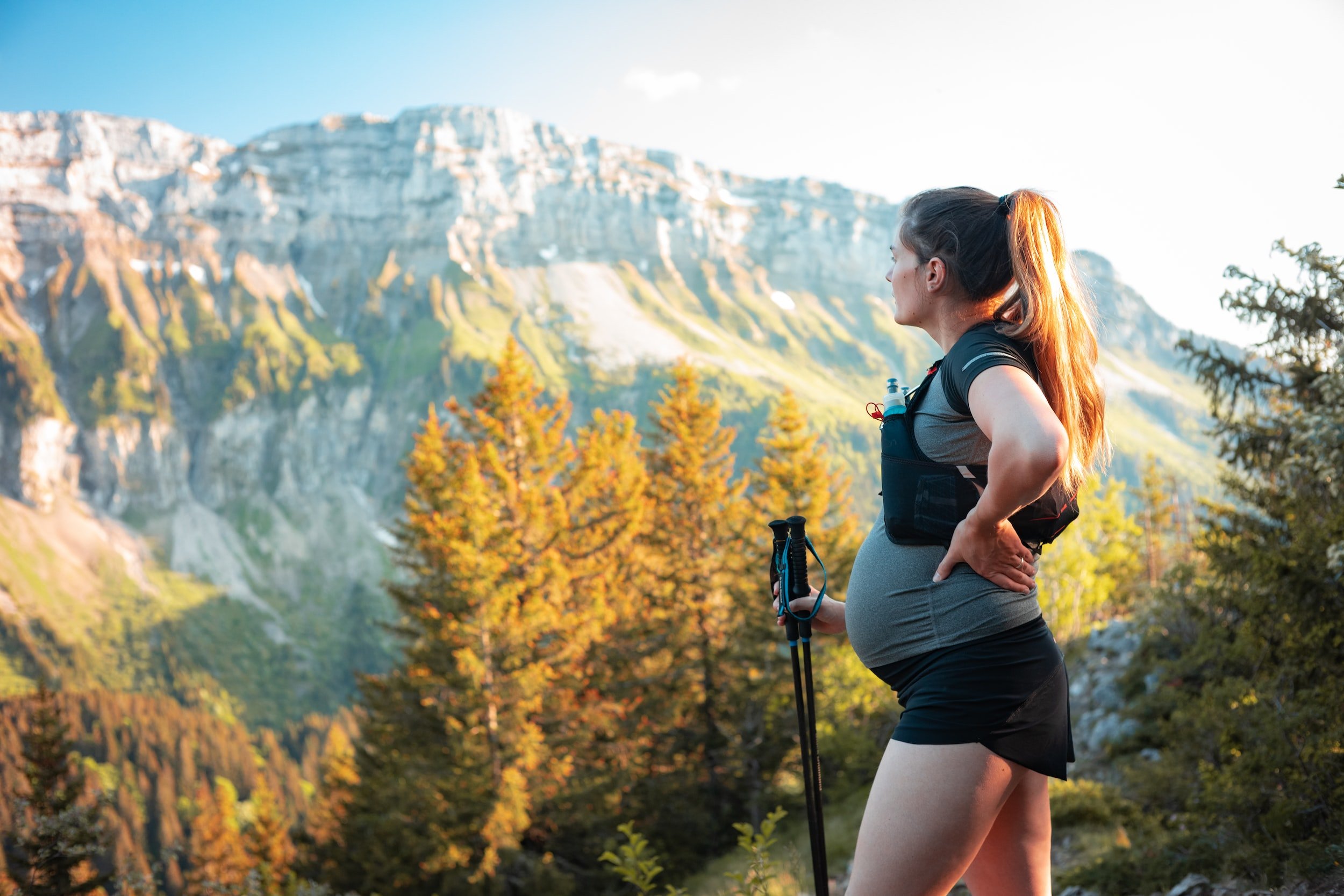
✅ Living with back pain in pregnancy
At work and around the house
Sit with your back supported, feet flat and hips level with your knees. A rolled towel behind your lower back helps.
Get up and move every 30 to 45 minutes, whether you sit or stand at work.
Bend your knees and keep your back straight when you lift. Hold the load close and turn with your feet.
Split shopping between two bags, and avoid lifting heavy things.
Wear flat shoes, which spread your weight more evenly.
At work, ask for a pregnancy risk assessment and a good chair.
Sleep
Lie on your side with a pillow between your knees and one under your bump. A pregnancy pillow can help.
From 28 weeks, go to sleep on your side. Leeds Teaching Hospitals suggests your left side if it's comfortable.
Roll over with your knees together, then push up with your arms to get out of bed.
If your mattress is too soft, the NHS suggests a board under it.
A warm bath or a warm pack on your lower back, kept off your bump, can ease pain before bed.
Exercise
The NHS says exercise is safe for you and your baby. It suggests 150 minutes of moderate activity a week, plus two strength sessions, if you can.
Keep doing what you already do, adapted as your bump grows. Start anything new gently.
Walking, swimming, aquanatal classes and pregnancy yoga are good choices.
In later pregnancy, swap exercises lying on your back for side-lying, seated or all-fours versions.
Avoid sports with a risk of falling or a bump to your tummy.
Stop if you feel unwell, too hot or have pain that doesn't settle.
Related conditions
Pelvic girdle pain in pregnancy: pain at the front or back of the pelvis, worse walking or on stairs
Lower back pain: an ache or catch across the low back that changes with movement
Sciatica: pain, tingling or numbness that travels below the knee
Pregnancy and postnatal physio: everything we help with, during pregnancy and after birth
❓ Back pain in pregnancy FAQs

🚨 Physio, midwife, GP or A&E?
Most back pain in pregnancy is safe to manage with a physio alongside your usual maternity care. Some symptoms need your midwife or a doctor instead. This list follows NHS guidance.
Book a physio (no GP referral needed): back pain that changes with movement, sitting or standing; back pain that's affecting your sleep, work or daily life (book a physio assessment, and mention it to your midwife).
Call your midwife or maternity unit now, or your GP urgently or 111: back pain in your second or third trimester that comes and goes, or regular tightenings (call your midwife or maternity unit; it may be early labour); back pain with a temperature of 38C or above, shivering or pain when you pee (call your midwife or GP urgently, or NHS 111); pain on one or both sides, under your ribs (call your midwife or GP urgently); any bleeding from your vagina (call your midwife or maternity unit; before 20 weeks, your GP or early pregnancy unit); your waters break, or fluid leaks from your vagina (call your midwife or maternity unit); your baby is moving less, or the pattern has changed (call your midwife or maternity unit now; don't wait until the next day); a severe headache, problems with your vision, or sudden swelling of your face, hands or feet (call your midwife or maternity unit now; these can be signs of pre-eclampsia); a painful, swollen, warm calf (get checked today: call your midwife, GP or NHS 111; it may be a blood clot).
Call 999 or go to A&E: chest pain or difficulty breathing; loss of feeling in one or both legs, your bottom or genitals, or trouble controlling your bladder or bowel (call 999 or go to A&E now).
If you're unsure about your back pain, ring us on 07475 433300 and we'll tell you honestly whether to see us or someone else first. For anything about your baby, always call your maternity unit first.
Not sure whether your back pain needs a physio or your midwife? Book a free 15-minute call and we'll tell you honestly. Book a free call →
-
It's very common, especially as your bump grows. But pain that limits your sleep, work or daily life is worth getting help for.
-
It can start at any stage. The NHS says it's common early on, and it often builds as your bump grows.
-
Yes. We use gentle hands-on treatment and exercise, with you lying on your side or sitting. We don't use dry needling or machines, and nothing goes over your bump.
-
Sometimes. Back pain in your second or third trimester that comes and goes, or with tightenings, can be early labour. Call your midwife or maternity unit.
-
On your side, with a pillow between your knees and one under your bump. From 28 weeks, go to sleep on your side.
-
Gentle movements on all fours, side-lying hip lifts, sit-to-stands, walking and swimming often help. We'll choose the right ones for you.
-
The NHS says paracetamol is generally fine unless your GP or midwife says otherwise. Ask your midwife or pharmacist before taking anything else.
-
Some women find a belt helps short term. The evidence is limited, so we use it alongside exercise, not instead of it.
-
For most women it improves in the first 6 weeks after birth. If it doesn't, physio can help.
-
We teach and coach pelvic floor exercises. We don't do internal pelvic floor assessments. If you need one, we'll refer you to a women's health physio, your GP or your midwife.
-
No. You can book directly with us. Do tell your midwife you're seeing a physio. If you're claiming on insurance, check with your insurer first.
-
Your first 60-minute assessment and treatment is £95. Follow-up sessions are £55 for 30 minutes, £95 for 60 minutes or £135 for 90 minutes. See our price list for all fees.
📍 Book back pain physio for pregnancy in Manchester city centre
Athos Physio is inside F45 NQ, 77 Piccadilly, Manchester M1 2BU, a two-minute walk from Piccadilly station and Piccadilly Gardens. We're open 7am to 8pm, Monday to Friday, so you can come in before or after work.
Your first appointment is a 60-minute assessment and treatment (£95). Follow-ups are £55 for 30 minutes, £95 for 60 minutes or £135 for 90 minutes. We work with Bupa, WPA, Vitality and Aviva, and you can see all our fees on the price list.
Can't get into town? We also offer home physio visits and online physiotherapy. Not sure physio is right for you? Book a free 15-minute call and we'll talk it through.
Call or WhatsApp 07475 433300, or book online.
Other services: Physiotherapy and active rehab · Sports massage · Pregnancy and postnatal physio · Home visits · Online physio
Written by Nick Chatziviltsos, physiotherapist and founder of Athos Physio, BSc (Hons) Physiotherapy, HCPC registered. Last reviewed: November 2026.
Insurance providers we are affiliated with


Athos Physio is a full-service physiotherapy clinic
We offer injury rehabilitation, post-surgery functional strengthening, deep tissue massage and pain relief, and strength training expertise. We support you in becoming pain-free so that you can achieve a limitless life experience. If you want to speak with us before booking a session you reach out via WhatsApp, call us or email us.
We are based in Manchester city centre a couple of minutes walk from Piccadilly train station and Piccadilly Gardens Square