


Runner's knee treatment in Manchester
Settle the ache around your kneecap, build stronger hips and knees, and get back to running, squatting and stairs without thinking about it.

Runner's knee physio in Manchester city centre
Reviewed by Nick Chatziviltsos, PgDip, HCPC-registered physiotherapist (PH114351), November 2026
At a glance
Who gets it: Runners, teenagers in sport, people new to the gym, and anyone who has suddenly upped their squatting, stairs or hills.
Main symptom: A dull ache around or behind the kneecap, worse squatting, on stairs, running downhill or after sitting for a long time.
Typical recovery: Most people improve over 6 to 12 weeks of the right exercise. It can linger if the load isn't managed.
Sessions: Most people need 4 to 6 over 6 to 12 weeks.
Avoid: Stopping all activity, or pushing through runs that leave your knee worse the next day.
Get checked: A knee that locks, gives way, swells quickly after an injury, or is hot and red with a fever: see your GP or call 111.
Runner's knee is pain around or behind your kneecap. The medical name is patellofemoral pain. It usually comes on gradually, and it hurts most when you bend your knee under load, such as squatting, going down stairs or running.
It's one of the most common reasons runners and gym-goers see a physio. It isn't a sign that your knee is wearing out. It's a sign that the joint behind your kneecap is being asked to do more than it can comfortably handle right now.
The good news is that runner's knee responds well to the right plan. International experts recommend exercise for the hips and knees as the main treatment. Our job is to find what's overloading your knee, settle it, and build it back stronger than before.
🛠️ How we treat runner's knee
Every runner's knee plan at Athos Physio follows the same three steps. What changes is what we find at each one.
Step 1. Find the root cause
Runner's knee is usually a load problem, not a damage problem. In your first 60-minute session we work out three things:
What's irritated: the joint behind the kneecap, or something that looks similar, such as the patellar tendon, the fat pad or the IT band
What's overloading it: a jump in mileage, more hills or speed work, deep squats, lots of stairs, or a new training plan
What's limiting your capacity: weak quads or hips, poor single-leg control, stiffness, or a recent spell of less training
We show you on a 3D anatomy model how the kneecap glides in its groove. It helps you see why squats, stairs and downhill running load it most.
Step 2. Treat what's driving it
Calm the knee. Soft tissue work and IASTM for tight quads and hips, plus changes to the movements that flare it.
Adjust your running, don't stop it. We usually cut distance or pace, swap hills for flat routes, and use a simple pain rule so you can keep running if it's settling.
Use tape if it helps. Taping may ease pain for a while, so you can do your exercises. It's a short-term aid, not the treatment.
Step 3. Build it to last
This is the part that makes the biggest difference, and the part the research supports most.
Quad strength, from wall sits and leg presses to step-downs and split squats.
Hip strength, especially the muscles on the side and back of the hip, which help control your knee when you land.
Rehab on the gym floor. Being inside F45 NQ means we can use boxes, sleds and weights to load your knee steadily and safely.
Return to running, with a clear plan for distance, pace and hills, and tweaks such as shortening your stride if they help you.
We finish when you're running your normal distance and pace with confidence, not just when the knee stops aching on the stairs.
Want to know what's really overloading your knee? Your first 60-minute session finds out and starts treatment the same day. Book your assessment →
🔍 What is runner's knee?
Your kneecap (patella) sits in a groove at the end of your thigh bone (femur). Together they form the patellofemoral joint. When you bend your knee under load, the kneecap presses harder into the groove. The deeper the bend and the heavier the load, the higher that pressure.
In runner's knee, the tissues around this joint become sensitive. A 2016 international consensus defined it as pain around or behind the kneecap. The pain comes on with at least one activity that loads the bent knee, such as squatting, stairs, running, hopping or jumping.
It is very common. The same consensus reported that between 7% and 28% of young adolescents have it at any one time. It's also common in adult runners, military recruits and people who've recently started training harder.
Types of runner's knee we see
Load-related patellofemoral pain: the joint behind the kneecap is overloaded by a rise in running, squatting or stairs; runners, gym-goers, people starting new training.
Adolescent patellofemoral pain: pain around the kneecap during a growth spurt or busy sport season; teenagers, especially those playing one sport year-round.
Patellofemoral pain with early wear: pain behind the kneecap with some arthritis changes in the joint; adults over 40, often with a past knee injury or ACL surgery.
Kneecap instability: the kneecap has partly or fully slipped out of place before; younger people, often after a twisting injury. Needs a different plan.
Kneecap instability isn't the same as runner's knee, and we treat it differently. That's why we ask about it carefully at your first session.
⚠️ Runner's knee symptoms
With runner's knee you might notice:
A dull ache around, behind or just below the kneecap
Pain squatting, kneeling or lunging
Pain going down stairs more than up
Pain running, especially downhill or later in a run
Aching after sitting with your knees bent for a long time, such as at the cinema or on a long train journey
Clicking or grinding under the kneecap, which is common and usually harmless on its own
Sometimes a feeling of the knee being weak, without it truly giving way
Is it runner's knee, a tendon problem or something else?
Pain on a small spot just below the kneecap, worse jumping, points more towards the patellar tendon. See our patellar tendinopathy page.
Sharp pain on the outside of the knee that starts a set distance into a run suggests the IT band. See our IT band syndrome page.
Pain on the inner or outer joint line, with locking, catching or swelling after a twist, may be a meniscus tear. See our meniscus tear page.
Stiffness first thing, both knees, in someone over 45, may be osteoarthritis. See our knee and hip osteoarthritis page.
Pain at the front of the knee in a teenager, on the bump below the kneecap, may be Osgood-Schlatter's.
We test each of these at your first session rather than guessing from the symptoms alone.
🔍 What causes runner's knee?
Runner's knee usually comes down to load and capacity. Load is how much work you ask the knee to do. Capacity is how much it can comfortably handle. Pain builds when load rises faster than capacity.
Common triggers we see in Manchester
Marathon and half marathon training, especially a spring marathon block where weekly distance climbs quickly through winter.
Starting the Couch to 5k or a new parkrun habit, going from no running to several runs a week.
Lots of hills or stairs, such as hill reps, fell runs in the Peaks, or a new flat with several flights of stairs.
High-volume gym classes with lots of squats, lunges, jump squats and box jumps.
Long hours sitting at a desk or commuting, followed by evening runs.
Time off, then going straight back to your old distances.
Runner's knee myths
"Running wears out your knees." For most people it doesn't. Runner's knee is a sensitive joint, not a worn-out one.
"Clicking means damage." Painless clicking is normal, as the NHS points out. It's the pain that matters.
"You need to stop running." Most people can keep running at a level that doesn't flare the knee while they rehab.
"You need custom insoles." Off-the-shelf insoles may ease pain in the short term for some people. Custom ones haven't been shown to add more.
"It's just your kneecap tracking wrong." Kneecap position is only one small part of the picture. Strength and load matter far more.
🧪 How we assess runner's knee
Your first session lasts 60 minutes, so there's time to assess properly and start treatment the same day. Bring your running shoes and, if you use one, your running app or watch data.
Your story (10 to 15 minutes). When it started, your weekly distance and pace, recent changes to training, past knee injuries, and what makes it better or worse.
Safety screen. We check for swelling, locking, giving way, and signs of infection or anything that needs a doctor.
The squat test. Pain at the front of the knee during a squat is the most useful single test for runner's knee, according to the 2016 consensus.
Hands-on tests. We press around the edges of the kneecap, check the patellar tendon and joint lines, and test the kneecap's movement. We use the patellar apprehension test to check for instability.
Ligament and cartilage checks where needed. Lachman, McMurray and Thessaly tests, to rule out a ligament or meniscus problem if your story suggests one.
Strength and control. Step-down and single-leg squat quality, hop control, and strength of your quads and hips compared with the other side.
Your diagnosis and plan. In plain English: what's causing the pain, how to adjust your running this week, and how many sessions we expect.
You'll leave with treatment started and the first two or three exercises of your custom rehab plan. If we think you need a scan or a specialist opinion, we'll tell you and write to your GP.
🛠️ Runner's knee treatment at Athos Physio
Every plan moves through four phases. How fast you move depends on how your knee responds, not on the calendar.
Settle (weeks 0 to 2). Calm the knee and keep you active. Education on load, reduced running distance or flatter routes, soft tissue work and IASTM, taping if it helps, wall sits and isometric quad holds.
Build (weeks 2 to 6). Build quad and hip strength. Leg press, step-ups, side-lying and banded hip work, glute bridges, steady running within the pain rule.
Strengthen (weeks 6 to 10). Load the knee in deeper bends and on one leg. Step-downs, split squats, goblet squats, Romanian deadlifts, sled pushes, adding hills and pace back in.
Return and prevent (week 10 onwards). Back to full running and racing. Hops and bounds, speed sessions, a long-term strength routine twice a week, a plan for your next race build-up.
The pain rule for running
We usually let you keep running if pain stays at or below 3 out of 10 during the run, and your knee is no worse the next morning. If it is, we drop the distance or pace for a few days. This keeps you running while the knee settles.
Your home programme
Your home programme is usually 3 to 5 exercises, taking about 15 to 20 minutes, 3 to 4 times a week. It's a custom plan made for you, with clear progressions. Early on, it's mostly holds and simple strength work. Later it moves to single-leg and jumping exercises.
How many sessions?
Most people need 4 to 6 sessions over 6 to 12 weeks. Pain that has been there for many months often takes longer to settle. We'll give you an estimate at your first appointment.
What actually works for runner's knee?
Runner's knee has some of the clearest guidance of any knee problem, from international consensus meetings held in 2015 and 2017.
The 2016 consensus (Crossley and colleagues) recommends exercise therapy to reduce pain and improve function in the short, medium and long term. It recommends combining hip and knee exercises, rather than knee exercises alone.
The 2018 consensus (Collins and colleagues) confirmed this. It also recommended adding other treatments to exercise for short- and medium-term pain relief in adults. These include off-the-shelf foot orthoses, patellar taping or manual therapy.
A trial of 69 runners (Esculier and colleagues, 2018) found that education on symptoms and training load worked as well as adding exercises or gait retraining, over 20 weeks. The authors said education on load should be a primary part of treatment.
Recommended: clear education on load and how to adjust your running; combined hip and knee strengthening; combining exercise with taping, off-the-shelf insoles or hands-on treatment where they help you; a gradual return to full distance and pace.
Not recommended or uncertain: knee or kneecap mobilisation on its own, without exercise (not recommended); electrotherapy such as ultrasound (not recommended); custom-made insoles over off-the-shelf ones (no extra benefit found); gait retraining, taping, bracing, acupuncture or dry needling on their own (evidence uncertain).

⏱️ How long does runner's knee take to get better?
Recent onset, caught early: feeling much better: 2 to 4 weeks; back to full running or training: 6 to 8 weeks.
Present for 3 months or more: feeling much better: 6 to 8 weeks; back to full running or training: 3 to 4 months.
Teenager in sport: feeling much better: 4 to 8 weeks; back to full running or training: 2 to 3 months, alongside growth.
With early wear in the joint: feeling much better: 6 to 12 weeks; back to full running or training: ongoing strength plan.
The 2016 consensus notes that runner's knee can last for years if it isn't managed well. That's why we keep going until your knee can cope with your full training, not just daily life.
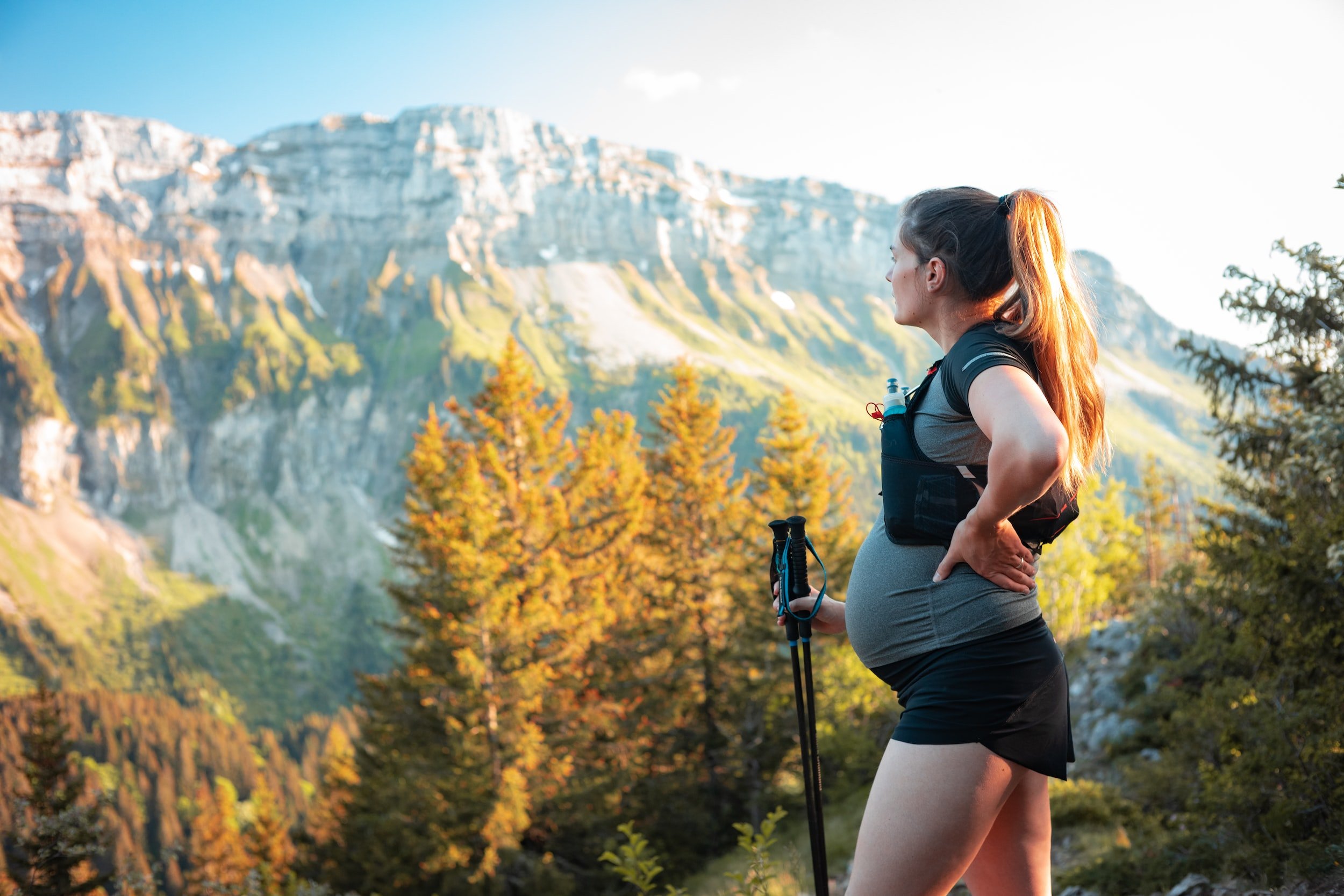
✅ Runner's knee at work, in the gym and on the road
If you run
Don't stop completely if your knee is settling. Use the pain rule above.
Swap hills, stairs and downhill sections for flat routes for a few weeks.
Try shortening your stride slightly, taking a few more steps per minute. Some runners find this eases knee pain.
Increase weekly distance gradually, adding roughly 10% a week if your knee stays settled.
Build up to race distance well ahead of a big event like the Manchester Marathon or Great Manchester Run.
If you train in the gym
Keep squatting to a depth that doesn't hurt, then add depth over the weeks.
Leg press, box squats and step-ups are usually easier than deep lunges early on.
Swap jump squats and box jumps for controlled strength work until the knee settles.
If you sit a lot
Straighten your legs or take a short walk every 30 to 45 minutes.
Choose an aisle seat on trains and at the cinema so you can stretch your leg out.
Self-help
Ice for up to 20 minutes after activity if it helps the ache.
Use wall sits or straight-leg holds daily. They often ease pain within a session.
Check your running shoes. Very worn-out pairs may be worth replacing.
A pharmacist can advise on painkillers, including ibuprofen gel.
Related conditions
Patellar tendinopathy: pain on a small spot just below the kneecap, worse jumping
IT band syndrome: sharp pain on the outside of the knee partway into a run
Meniscus tear: knee pain on the joint line, with catching or swelling after a twist
Shin splints: aching along the inside of the shin bone when you run
❓ Runner's knee FAQs

🚨 Physio, GP or A&E?
Most runner's knee is safe to manage with a physio. A few symptoms need a doctor first. This list follows NHS advice on knee pain.
Book a physio (no GP referral needed): an ache around the kneecap that's worse running, squatting or on stairs; knee pain that hasn't improved after a few weeks of rest and self-care (book a physio or see your GP).
Call your GP urgently or 111: a knee that locks, gives way, or clicks painfully (call 111 or book a physio assessment soon); a very painful knee you can't move or put weight on, or that is badly swollen (call 111 or go to an urgent treatment centre); a hot, red, swollen knee with a high temperature or feeling shivery (call 111 now; this can be a sign of infection).
Call 999 or go to A&E: the kneecap has moved out of place, or the knee has changed shape after an injury (go to A&E or an urgent treatment centre now).
If you're ever unsure, ring us on 07475 433300 and we'll tell you honestly whether you should see us or someone else first.
Not sure whether you need a physio, a scan or a GP? Book a free 15-minute call and we'll tell you honestly. Book a free call →
-
Yes. International experts recommend exercise for the hips and knees as the main treatment, and most people improve within a few months.
-
Usually yes, at a lower level. If pain stays at 3 out of 10 or less, and your knee is no worse next morning, keep running.
-
Most people feel much better within 6 to 12 weeks of the right exercise. It can last much longer if training load isn't adjusted.
-
No. Runner's knee is a sensitive joint behind the kneecap. It isn't a sign that your knee is wearing out.
-
Some people find a support or tape eases pain in the short term. Neither is a long-term fix. Strength work is.
-
Not usually. Off-the-shelf insoles can help some people in the short term. Custom-made insoles haven't been shown to work better.
-
Rarely. Runner's knee is diagnosed by examination. A scan is only useful if we suspect a different problem, such as a meniscus or ligament injury.
-
Going down loads the kneecap joint more than going up. Your thigh muscles work hard to slow you down with the knee bent.
-
Most people need 4 to 6 over 6 to 12 weeks. We'll give you an estimate at your first appointment.
-
No. You can book directly with us. If you're claiming on health insurance, check with your insurer first.
-
Your first 60-minute assessment and treatment is £95. Follow-up sessions are £55 for 30 minutes, £95 for 60 minutes or £135 for 90 minutes. See our price list for all fees.
-
Yes. Book a free 15-minute consultation and we'll tell you honestly whether physio is the right next step.
📍 Book runner's knee physio in Manchester city centre
Athos Physio is inside F45 NQ, 77 Piccadilly, Manchester M1 2BU, a two-minute walk from Piccadilly station and Piccadilly Gardens. We're open 7am to 8pm, Monday to Friday, so you can come in before or after work.
Your first appointment is a 60-minute assessment and treatment (£95). Follow-ups are £55 for 30 minutes, £95 for 60 minutes or £135 for 90 minutes. We work with Bupa, WPA, Vitality and Aviva, and you can see all our fees on the price list.
Can't get into town? We also offer home physio visits and online physiotherapy. Not sure physio is right for you? Book a free 15-minute call and we'll talk it through.
Call or WhatsApp 07475 433300, or book online.
Other services: Physiotherapy and active rehab · Sports massage · Pregnancy and postnatal physio · Home visits · Online physio
Written by Nick Chatziviltsos, physiotherapist and founder of Athos Physio, BSc (Hons) Physiotherapy, HCPC registered. Last reviewed: November 2026.
Insurance providers we are affiliated with


Athos Physio is a full-service physiotherapy clinic
We offer injury rehabilitation, post-surgery functional strengthening, deep tissue massage and pain relief, and strength training expertise. We support you in becoming pain-free so that you can achieve a limitless life experience. If you want to speak with us before booking a session you reach out via WhatsApp, call us or email us.
We are based in Manchester city centre a couple of minutes walk from Piccadilly train station and Piccadilly Gardens Square